

Computer Vision
Computer Vision
Turn images and video into operational insight for safety, quality, assets and service performance.
Computer Vision uses machine-learning models to identify objects, conditions, movement or change in images and video. The service begins with a precise operational question and evaluates whether available cameras, image quality, lighting, viewpoints and labelled data can support a reliable solution. Pilot results are measured against agreed accuracy, false-alert and response criteria before any production rollout.
Deployments in workplaces and public environments require careful consideration of privacy, purpose limitation, signage, retention, access, security and human review. Architecture may use edge processing, cloud services or a controlled hybrid model depending on latency, connectivity, data classification and hosting requirements. Albrandz Technology structures the engagement for organisations operating across Saudi Arabia, the UAE, Qatar, Oman, Bahrain and Kuwait, with clear scope, stakeholder responsibilities, review points, acceptance criteria and knowledge transfer.
What Computer Vision Includes
Use-Case Feasibility
Image and Video Data
Model Development
Edge and Platform Integration
Operational Monitoring
GCC Delivery Considerations for Computer Vision
AI delivery in GCC organisations should balance innovation with data governance, cybersecurity, human oversight and operational accountability. Public-sector entities may need formal use-case approval, procurement documentation, hosting decisions and evidence that the solution supports policy and service objectives. Private enterprises may move faster, but still need controlled access, reliable data, measurable benefits and a clear owner for ongoing performance. Where Arabic and English experiences are required, language quality and source coverage should be tested as part of acceptance rather than assumed from the underlying technology.
Our Computer Vision Delivery Approach
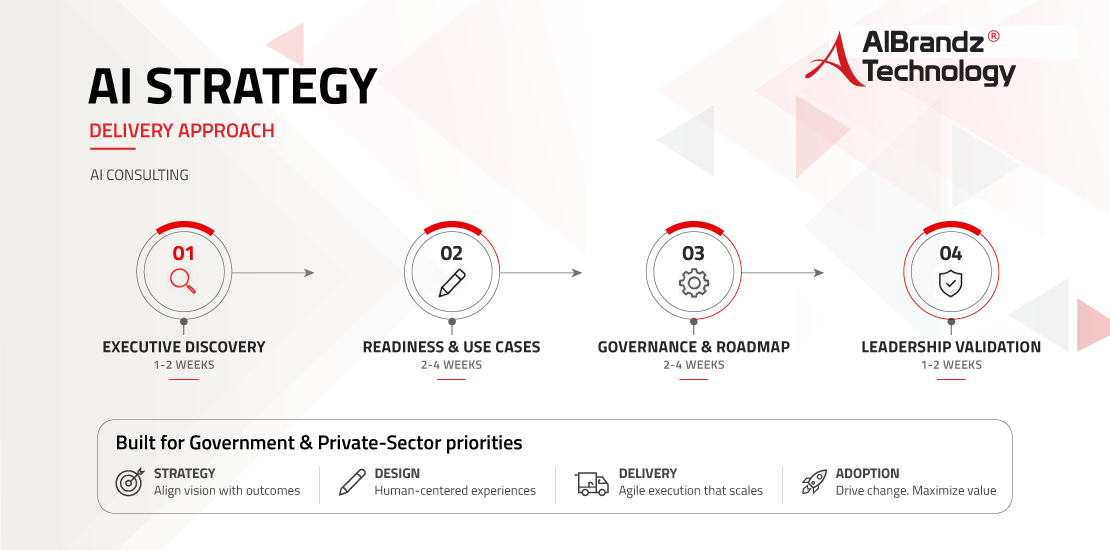
The engagement is managed through clear stages and review gates. The exact activities are tailored to the confirmed scope, but a typical Computer Vision assignment follows the approach below:
Feasibility study
Use-case definition, site and camera review, data sampling, privacy assessment and pilot design. The stage includes stakeholder review, documented decisions and confirmation of the inputs required for the next phase.
Model pilot
Dataset preparation, model development, controlled testing and accuracy evaluation. The stage includes stakeholder review, documented decisions and confirmation of the inputs required for the next phase.
Single-site deployment
Camera or edge integration, alerts, dashboard, security testing, procedures and training. The stage includes stakeholder review, documented decisions and confirmation of the inputs required for the next phase.
Multi-site rollout
Infrastructure scaling, model adaptation, monitoring, governance and phased operational adoption. The stage includes stakeholder review, documented decisions and confirmation of the inputs required for the next phase.
Discuss your computer vision requirements with Albrandz Technology and request a tailored GCC delivery plan.
Benefits of Computer Vision
- Automates visual checks that are difficult to perform continuously at scale.
- Provides earlier alerts for safety, quality, security or operational exceptions.
- Creates structured information from existing image and video sources where appropriate.
- Supports asset, progress and service monitoring across distributed sites or facilities.
- Uses phased validation and measurable acceptance criteria before organisation-wide scaling.
- Supports responsible adoption through documented data, access, approval and monitoring controls.
Who Needs Computer Vision?
- Construction and infrastructure programmes monitoring progress, safety or site conditions.
- Airports, logistics hubs and facilities managing movement, assets and operational zones.
- Manufacturing and utilities organisations conducting inspection or quality assurance.
- Retail and public-service locations analysing queues, occupancy or service flow within approved privacy controls.
- Government and semi-government organisations adopting AI within governed service or operational environments.
- Private enterprises that need a practical business case and controlled path to production.
How Much Time Is Needed for Computer Vision?
Delivery time depends on scope, data and system readiness, stakeholder availability, procurement requirements, security reviews, integrations and approval cycles. Indicative delivery ranges are:
- Feasibility study (2-4 weeks): Delivery range subject to confirmed scope, inputs, approvals and resource availability.
- Model pilot (6-12 weeks): Delivery range subject to confirmed scope, inputs, approvals and resource availability.
- Single-site deployment (10-20 weeks): Delivery range subject to confirmed scope, inputs, approvals and resource availability.
- Multi-site rollout (4-12 months): Delivery range subject to confirmed scope, inputs, approvals and resource availability.
The final schedule is confirmed after discovery and scope validation. Government programmes may require additional time for tender procedures, governance approvals, security assessment, data classification, hosting decisions and formal acceptance.
Computer Vision
Click below to learn more about our services and solutions.