
PMO Services in India & GCC
PMO Services in India & GCC
- November 19, 2026
- Posted by: danyal
- Category: PMO Services
Introduction
Successful project delivery requires more than completing tasks according to a schedule. Organisations must coordinate teams, manage resources, monitor budgets, assess risks, and maintain clear communication between stakeholders. Without structured project management practices, even well-planned initiatives can experience delays, unexpected challenges, and inefficient use of resources.
For businesses and organisations across India and the Gulf Cooperation Council (GCC), Project Management Office (PMO) services can help establish consistent processes, strengthen governance, and improve management visibility.
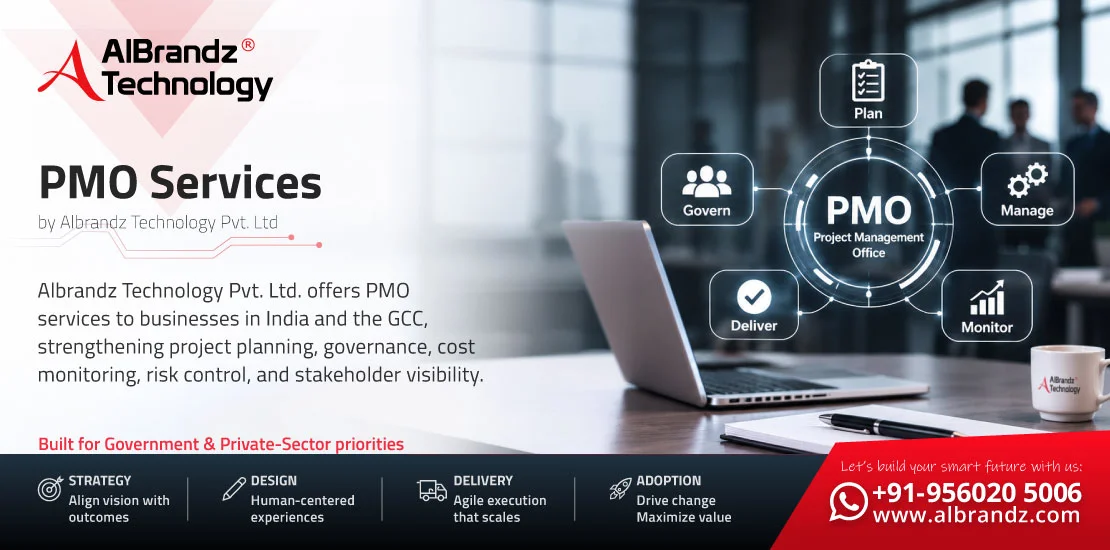
Albrandz Technology Pvt. Ltd. provides PMO-related services designed to support structured project planning, information management, cost monitoring, and risk control.
Why Are PMO Services Important?
A Project Management Office helps organisations establish common standards for managing and monitoring projects. Depending on business requirements, a PMO may support an individual project, multiple programmes, or a wider portfolio of initiatives.
PMO services can help organisations:
Establish consistent project management procedures.
Improve coordination between departments and project teams.
Monitor project schedules, budgets, and performance indicators.
Identify delays, financial variations, and emerging risks.
Improve reporting for project managers and senior leadership.
Support informed decisions through reliable project information.
A structured PMO approach provides a clearer understanding of project progress and helps management identify where corrective action may be necessary.
PMO Services by Albrandz Technology
PMO Consulting
PMO consulting helps organisations evaluate their existing project management practices and identify opportunities to improve performance. The process may include reviewing governance structures, reporting procedures, responsibilities, project controls, and performance measurement methods.
A PMO framework can define how projects are approved, monitored, escalated, and reviewed. Clear responsibilities help teams understand their roles, while standard reporting makes it easier for management to compare project performance.
For organisations managing several projects simultaneously, PMO consulting can also help align project activities with strategic priorities and improve coordination between teams.
PMIS Implementation
A Project Management Information System (PMIS) provides a structured way to collect, organise, analyse, and distribute project information. Depending on requirements, a PMIS may include dashboards, reports, progress tracking, document management, and performance indicators.
Albrandz Technology’s PMIS-related capabilities can help organisations assess their requirements and establish suitable information management processes. Implementation may involve system planning, data integration, dashboard configuration, access controls, and reporting design.
When project information is organised effectively, project managers can identify important changes more easily and provide stakeholders with timely updates. The system must also be supported by reliable data, appropriate permissions, and clearly defined reporting responsibilities.
Project Planning
Project planning translates objectives and agreed project scope into a practical delivery roadmap. It may include defining activities, establishing milestones, identifying dependencies, assigning resources, and preparing schedules.
A comprehensive project plan helps teams understand what must be completed, who is responsible, and when important decisions or approvals are required.
For complex projects, planning may also involve reviewing critical activities, tracking schedule variations, assessing completion forecasts, and evaluating alternative delivery scenarios. Regular updates help management understand whether the project remains aligned with its approved objectives.
Cost Control
Cost control helps organisations monitor expenditure against approved project budgets and identify financial variations. Without regular monitoring, unexpected expenses or inefficient resource allocation may affect the project’s overall performance.
Cost control activities can include budget tracking, expenditure reporting, variance analysis, financial forecasting, and review of potential cost pressures.
By connecting financial information with project progress, managers can better understand the reasons behind variations and consider appropriate corrective measures. Clear cost reporting also supports accountability and helps decision-makers evaluate the financial implications of proposed changes.
Risk Management
Every project faces uncertainties that may affect its schedule, budget, quality, or intended outcomes. Risk management provides a structured method for identifying, evaluating, prioritising, and monitoring these uncertainties.
A risk management process may include maintaining a risk register, assessing likelihood and potential impact, assigning responsible owners, and defining mitigation or contingency measures.
Regular reviews help teams identify changing conditions and escalate important issues before they significantly affect project delivery. Risk management should remain an ongoing activity throughout the project lifecycle rather than being limited to the initial planning stage.
PMO Services for India and GCC Markets
Organisations in India and GCC countries may manage projects involving multiple departments, consultants, contractors, suppliers, technology partners, and regulatory stakeholders. Coordinating these participants requires clear responsibilities, reliable information, and consistent reporting practices.
Industries such as construction, infrastructure, transportation, real estate, government, and technology may benefit from structured project controls. However, each organisation requires an approach suited to its project complexity, governance requirements, existing systems, and operational priorities.
For GCC organisations, projects may also involve multiple locations, international stakeholders, formal approval processes, and specific contractual requirements. An appropriately designed PMO framework can help maintain consistency while accommodating these operational differences.
Why Choose Albrandz Technology?
Albrandz Technology Pvt. Ltd. combines technology capabilities with project management and digital-transformation support. Its PMO service portfolio includes PMO Consulting, PMIS Implementation, Project Planning, Cost Control, and Risk Management.
A business-focused approach begins with understanding organisational objectives, current processes, reporting requirements, and project challenges. Based on the confirmed scope, suitable processes and technology solutions can then be identified and implemented.
The objective is to help organisations improve project visibility, strengthen accountability, and establish more structured delivery practices.
Conclusion
Effective PMO services help organisations bring greater structure and transparency to project delivery. From establishing governance frameworks to implementing information systems, controlling costs, and monitoring risks, these practices support better coordination and more informed management decisions.
For businesses in India and the GCC, a well-designed PMO approach can improve visibility across projects and help teams respond more effectively to changing requirements.
Looking to strengthen your project management processes?
Contact Albrandz Technology Pvt. Ltd. to discuss your requirements.
Website: https://www.albrandz.com
Email: info@albrandz.com
WhatsApp/Botim: +91-9560205006
Ready to discuss your digital transformation requirements? Contact Albrandz today.
“Your team has excellent skills in digital strategies, analysis, and innovative design and development of the website. And so, I would like to thank you again for all your creative work on behalf of my business.”
